If Korean BBQ is the party, stews are the quiet dinner at home that you actually crave. They’re the backbone of everyday Korean eating — bubbling, shared, eaten with a bowl of rice and a few side dishes. Once you know a handful, you’ll always have something to order.
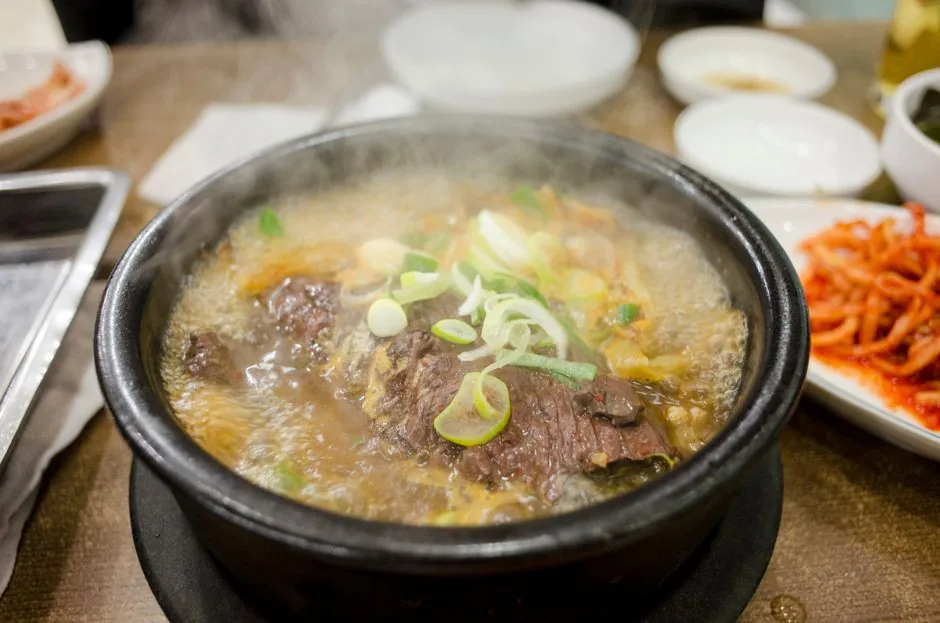
First, three words on the menu that trip people up. A jjigae is a thick, hearty stew, usually shared from one bubbling pot. A guk is a lighter, soupier bowl, often served per person. A tang sits in between — a rich, long-simmered soup. That’s it. Now the dishes.
Start with these
Kimchi-jjigae — made from aged kimchi, pork, and tofu. Sour, deep, and savory, it’s the one most Koreans could eat every week. The older the kimchi, the better the stew. I had this for the first time on a rainy Tuesday and it became my most-ordered dish within a month — it has that effect.
Doenjang-jjigae — built on fermented soybean paste, with tofu, vegetables, and sometimes clams. Earthy and savory rather than spicy. If you like miso soup, this is its bolder cousin.
Sundubu-jjigae — silky soft tofu in a red, gently spicy broth, often with seafood or pork, usually served bubbling with a raw egg cracked in at the table. Cozy and forgiving for newcomers.
When you want comfort, not spice
Samgyetang — a whole young chicken stuffed with rice, garlic, and ginseng in a clear, milky broth. Mild, restorative, and famously eaten in the hottest days of summer to “fight heat with heat.”
Galbitang — beef short-rib soup, clear and clean-tasting, with glass noodles. Almost impossible to dislike.
Seolleongtang — a milky-white ox-bone broth simmered for hours. It arrives nearly unseasoned on purpose; you salt it and add the scallions yourself.
The fun one
Budae-jjigae — “army stew,” a post-war invention mixing kimchi and Korean broth with ham, sausage, baked beans, and instant noodles. Sounds chaotic, tastes incredible, and it’s made for sharing with a group. Don’t let the ingredient list put you off — the first spoonful usually wins people over immediately.
Which one to order first (a spice ladder)
A stew menu can be a wall of unfamiliar names. Here’s the quick decoder, mildest to boldest, so you can point with confidence:
- 된장찌개 (doenjang, soybean paste) — savory and earthy, barely spicy. The safest first order.
- 순두부찌개 (sundubu, soft tofu) — silky and comforting; spice varies, so you can ask for it mild.
- 김치찌개 (kimchi) — tangy and moderately spicy, richer with aged kimchi.
- 부대찌개 (budae, “army stew”) — rich, salty, and spicy, loaded with sausage, ham, and noodles.
One phrase worth memorizing: “덜 맵게 해주세요” (deol maepge haejuseyo) — “less spicy, please.” Many places will adjust.
How to eat them
Stews come hot enough to keep bubbling at the table. You don’t drink them like Western soup — you eat alongside rice, spooning broth and bits over each bite, with the side dishes filling in. Most spicy ones can be ordered a little milder if you ask. And almost all of them are better shared.
You don’t need to memorize all of these. Pick one comfort option (samgyetang or galbitang) and one everyday classic (kimchi-jjigae), and you’ve got cold days and hungry nights covered.
How they’re served, and ordering for one
A Korean stew rarely arrives alone. It comes with rice and a spread of free side dishes, and that’s the intended way to eat it: a spoon of stew, a bite of rice, a piece of kimchi, repeat. The pot keeps bubbling on a little tabletop burner, so it stays hot to the last spoonful. You don’t drink it down like Western soup — you graze across the table.
Most jjigae are built to be shared, which can trip up solo diners. If you’re eating alone, you’ve still got good options: many places serve single-portion stone-pot versions, and dishes like sundubu-jjigae and most -tang soups are commonly plated per person. Gukbap — “soup with rice,” the rice served in or beside the bowl — is practically designed for one.
A couple more worth knowing as you go deeper. Haejangguk, literally “hangover soup,” is the morning-after classic: a hearty broth meant to settle a rough night, and a real window into everyday Korean life. Gamjatang, a spicy pork-bone stew with potato and perilla, is the kind of thing a table orders to share and then quietly competes over the last piece of meat clinging to the bone.
The move for newcomers: pick one mild comfort bowl (samgyetang or galbitang) and one everyday classic (kimchi-jjigae), order a rice each, and let the side dishes fill the gaps. That covers cold nights and hungry days without a single scary order.
FAQ
What’s the difference between jjigae, guk, and tang? Jjigae is a thick shared stew, guk is a lighter individual soup, and tang is a rich long-simmered soup in between.
Which Korean stews aren’t spicy? Doenjang-jjigae is mild and earthy, while samgyetang, galbitang, and seolleongtang have no chili at all.
How are stews eaten? With a bowl of rice and side dishes, usually shared from the pot — you spoon broth over rice rather than drinking it straight.
Which Korean stew should a beginner try first? Kimchi-jjigae is the everyday classic, and sundubu-jjigae (soft tofu) is gentle and forgiving. If you want zero spice, go with samgyetang or galbitang — both are mild and comforting.
New to Korean food? Start with where to begin and what to order first.
About the author — Jae is a Seoul-based writer at K-Culture Log, helping newcomers get into Korean culture without the overwhelm.