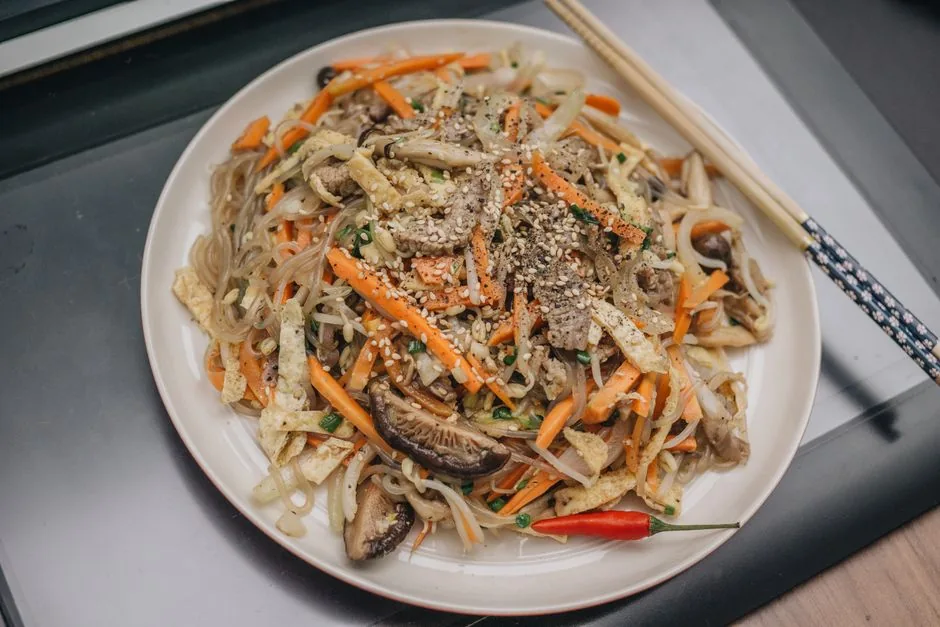
Japchae is a Korean dish of chewy sweet-potato glass noodles stir-fried with colorful vegetables, seasoned with soy sauce and sesame oil, and often mixed with strips of beef. It’s savory, a little sweet, glossy, and endlessly comforting — the kind of dish that shows up at birthdays, holidays, and potlucks because everyone loves it. If you’ve seen those translucent, springy noodles at a Korean table and wondered what they were, this is your answer.
What japchae actually is
The heart of japchae is dangmyeon — noodles made from sweet potato starch. When cooked, they turn clear and bouncy, which is why japchae is often called “glass noodles.” Those noodles get tossed with vegetables (spinach, carrots, onions, mushrooms, bell peppers), usually some beef, and a sauce built on soy sauce, sugar, and sesame oil. The result is a dish that’s savory and lightly sweet at once. For the plain-facts version, Wikipedia’s japchae entry is a good reference, and if Korean food is new to you, start with Korean food for beginners.
Why it tastes the way it does
Japchae’s magic is in the balance. The soy sauce brings salt and depth, a touch of sugar rounds it out, and sesame oil ties everything together with that toasty aroma. Each vegetable is often cooked separately so it keeps its own color and texture — which is why a good plate of japchae looks like confetti and eats with a satisfying mix of crunch and chew. It’s naturally not spicy, which makes it one of the easiest Korean dishes to love on the first bite.
When Koreans eat it
Japchae is a celebration dish. You’ll find it at birthdays, weddings, holidays like Chuseok and Seollal, and family gatherings, usually served as a shared side or main. It’s also a potluck favorite because it’s just as good warm or at room temperature. It pairs beautifully with rice and other dishes — the same way bulgogi does at a spread.
My first plate (and why it converted me)
I’ll be honest: the first time someone offered me “glass noodles,” I pictured something bland. Then I actually tried japchae at a friend’s Chuseok table, and the mix of that springy noodle, sweet-savory sauce, and toasted sesame completely changed my mind — I went back for thirds and slightly embarrassed myself. What sold me was how un-intimidating it is: no chili, no funk, just cozy, glossy comfort. If you’re nervous about trying Korean food, japchae is the gentlest possible on-ramp, and it sits nicely alongside the other picks in my must-try Korean dishes roundup.
Ordering or trying it
At a Korean restaurant, japchae is usually listed among the noodle or side dishes — order it to share. Vegetarian versions are common (just skip the beef), which makes it a reliable choice for mixed groups. It’s mild, shareable, and familiar enough in texture that even picky eaters tend to come around.
FAQ
What is japchae made of? Sweet-potato starch glass noodles (dangmyeon) stir-fried with vegetables like spinach, carrots, onions, and mushrooms, seasoned with soy sauce and sesame oil, and often mixed with beef.
Is japchae spicy? No. Japchae is savory and lightly sweet, not spicy, which makes it one of the most beginner-friendly Korean dishes.
Is japchae vegetarian? It can easily be. Traditional versions often include beef, but vegetable-only japchae is very common and just as delicious.
When do Koreans eat japchae? It’s a celebration dish served at birthdays, weddings, and holidays like Chuseok and Seollal, and it’s a popular potluck and party dish because it’s good warm or at room temperature.
Keep exploring: what is kimchi, bulgogi, and the full must-try Korean dishes list. More in the K-Food section.
This is a friendly food guide for newcomers to Korean cuisine.
About the author — Jae writes K-Culture Log to help newcomers enjoy Korean culture without gatekeeping. There’s no wrong way to be a fan.