Tteokbokki is chewy cylindrical rice cakes simmered in a sweet-and-spicy red sauce — and for a lot of Koreans, it’s the taste of being a teenager standing at a street cart. If you’ve seen a bright orange-red dish bubbling in a wide pan on a Seoul sidewalk, that’s almost certainly it. Here’s what’s actually in it, how to eat it, the variations worth knowing, and how to order it at the spice level you can handle.
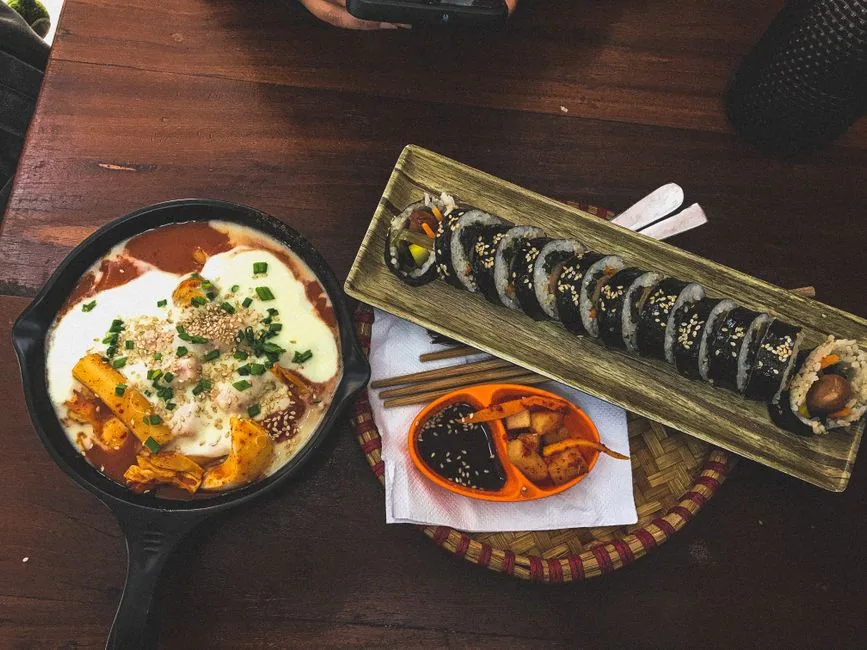
What tteokbokki actually is
The base is garae-tteok — smooth, cylindrical rice cakes with a satisfying chew that’s the whole point of the dish. They’re simmered in a sauce built on gochujang (fermented red chili paste) and gochugaru (chili flakes), balanced with sugar and soy, until everything turns glossy and thick. Most versions also throw in eomuk (fish cake), scallions, and sometimes a boiled egg.
The flavor is the Korean sweet-spicy combination at its most addictive: heat that builds, sugar that softens it, and that springy rice-cake texture soaking up the sauce. It’s comforting, cheap, and a little bit of a rite of passage. According to Wikipedia, the modern spicy version was popularized in Seoul’s Sindang-dong neighborhood in the mid-20th century, which is now famous for its tteokbokki “town.”
A surprising history: it started mild
Here’s the twist most people don’t expect: the original tteokbokki wasn’t spicy at all. Gungjung tteokbokki (“royal court tteokbokki”) was a soy-sauce-based dish served in the Joseon palace, stir-fried with beef and vegetables — no chili in sight. The fiery red version you see everywhere today is the modern, post-war reinvention. So if you ever see a brown, soy-glazed tteokbokki on a menu, that’s not a mistake — it’s the older, milder ancestor, and it’s delicious in its own right.
The variations worth knowing
Once you’ve had the classic, the spin-offs are half the fun:
- Rabokki — tteokbokki with ramyeon noodles added. The instant noodles soak up the sauce and make it a full meal.
- Cheese tteokbokki — finished with melted mozzarella, which tames the heat and adds stretch.
- Gungjung tteokbokki — the non-spicy, soy-based royal version; a good entry point if you don’t do chili.
- Gireum tteokbokki — pan-fried in oil rather than simmered in sauce, common in some Seoul markets.
Many street stalls and bunsik (snack) restaurants serve tteokbokki alongside twigim (fritters) and sundae (blood sausage) — dunking the fritters in the leftover sauce is the move.
How to eat it (and survive the spice)
Tteokbokki is shared, eaten hot, straight from the pan or a paper cup. A few practical tips:
- It’s spicier than it looks to many first-timers. If you’re unsure, ask for deol maepge (“less spicy”) — some places can adjust.
- The rice cakes are very chewy — bite, don’t try to swallow whole.
- Order a drink. Milk or a sweet drink cuts the heat better than water.
- Save the sauce: dip fritters, or ask for rice or noodles to finish it.
For where tteokbokki fits in the wider world of Korean street eating, see the Korean street food guide.
Where to try it
You’ll find tteokbokki almost everywhere: street carts (pojangmacha), bunsik chains, market alleys, and dedicated tteokbokki restaurants. Sindang-dong Tteokbokki Town in Seoul is the pilgrimage spot, serving the dish for decades. For a first taste, any busy street stall with a steaming red pan is a safe bet — high turnover means fresh, hot rice cakes.
If you’re newer to Korean food overall, tteokbokki is one of the friendliest places to start — it’s everywhere, it’s cheap, and it’s genuinely beloved rather than a tourist gimmick. Add it to your list alongside the other must-try Korean dishes.
🙋 Speaking from experience
I’ll be honest: I’ve never been the strongest with spice, and my first serious plate of tteokbokki had me reaching for water between bites. And yet I could not stop eating it. That’s the strange magic of this dish — the heat is more warm-and-sweet than punishing, and it pulls you back in. If you’re spice-shy like me, order it from a place that’ll dial the heat down, or grab a version with a fish cake or a boiled egg to mellow it. Don’t let “it’s spicy” scare you off; start milder and you’ll almost certainly get hooked the same way I did.
FAQ
What does tteokbokki taste like? Sweet and spicy at once, with chewy rice cakes in a thick, glossy gochujang-based sauce. The heat builds gradually and is balanced by sugar, making it comforting rather than punishing for most people.
Is tteokbokki very spicy? The common version has a real kick that surprises some first-timers. Cheese tteokbokki is milder, and the soy-based gungjung tteokbokki isn’t spicy at all. At some shops you can ask for it less spicy (deol maepge).
Is tteokbokki vegetarian? Often not — the sauce or broth frequently includes fish cake (eomuk) or anchovy stock. Some places offer vegetable-only versions, but ask to be sure if you avoid seafood.
What’s the difference between tteokbokki and rabokki? Rabokki is tteokbokki with ramyeon noodles added, turning the snack into a heartier, saucier meal. It’s a popular variation rather than a separate dish.
Hungry for more? Explore Korean stews or the full Korean street food guide. More in the K-Food section.
About the author — Jae is a Seoul-based writer at K-Culture Log, helping newcomers get into Korean culture without the overwhelm.