Menus at Korean restaurants can feel endless, and every “must-try” list throws twenty dishes at you at once. So here’s a different take: a Korean food list organized by category, so you can scan it like a map and know what you’re ordering. Think of this as your cheat sheet — from someone who’s played “menu translator” for a lot of nervous first-timers.
Rice & bowls (the safe starting point)
If you’re unsure, start here — these are approachable and beginner-friendly:
- Bibimbap — rice topped with vegetables, egg, and gochujang; you mix it all together.
- Kimbap — seaweed rice rolls, a portable everyday favorite.
- Bokkeumbap — Korean fried rice, often kimchi-based.
Stews & soups (the heart of a Korean meal)
Bubbling, communal, and deeply comforting:
- Kimchi jjigae — kimchi stew, tangy and warming.
- Sundubu jjigae — silky soft-tofu stew, adjustable in spice.
- Budae jjigae — “army stew,” a hearty mix that surprises a lot of newcomers with its ingredients.
- Samgyetang — ginseng chicken soup, mild and restorative.
Grilled & meat (the social feast)
Best enjoyed with a group around the table:
- Samgyeopsal — grilled pork belly, the classic Korean BBQ.
- Galbi — marinated short ribs, a little sweeter.
- Bulgogi — thin marinated beef, one of the gentlest intros to Korean flavor.
Street food (fun, cheap, everywhere)
The snacks that define a night out:
- Tteokbokki — chewy rice cakes in sweet-spicy sauce.
- Korean corn dogs — the crispy, cheesy viral kind.
- Hotteok — sweet filled pancakes.
- Odeng/eomuk — fish-cake skewers in warm broth.
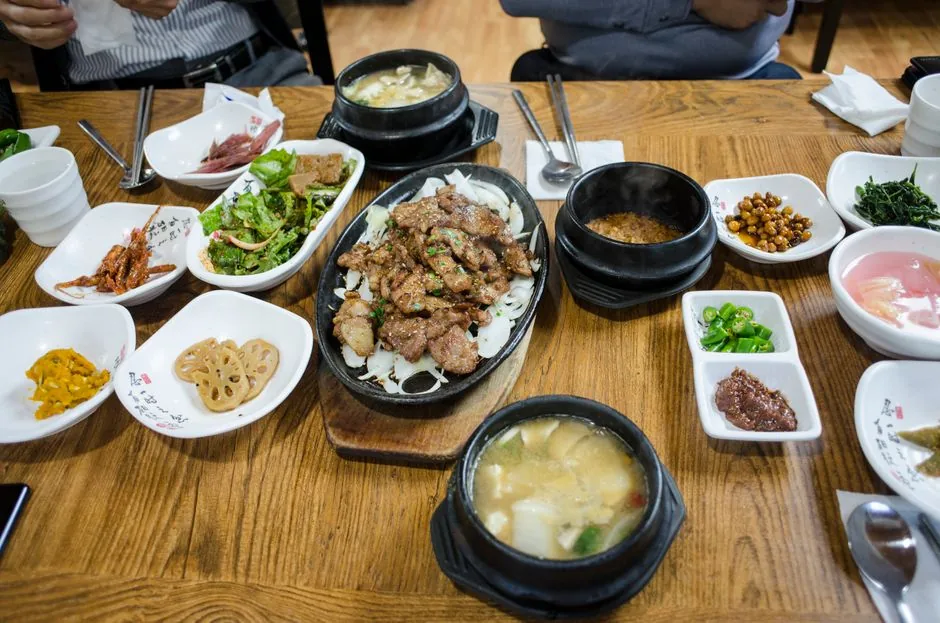
The supporting cast (banchan & staples)
Small dishes that come free and complete every meal:
- Kimchi — the essential fermented side, in many varieties.
- Assorted banchan — the little plates that arrive unasked (and are usually refillable).
🙋 Speaking from experience
Let me tell you where beginners actually get tripped up, because I’ve watched it happen at the table many times. It’s rarely the flavor — it’s the unfamiliarity. A friend once froze looking at budae jjigae because the ingredients surprised him, and another kept politely ignoring the free banchan because he assumed he’d be charged. I’ve been the one saying “order it less spicy,” “yes, the little dishes are free and they’ll refill them,” and “just mix the bibimbap, really mix it.” My own start was the same — I was actually weak with spicy food and learned to climb the ladder slowly, from mild sundubu upward. So use this list as permission to go at your own pace: start with the rice bowls and milder grills, say “less spicy” without shame, and let your tolerance and curiosity grow. There’s no wrong order to fall in love with Korean food.
FAQ
What are the essential Korean dishes for beginners? Start with approachable ones: bibimbap and kimbap (rice), bulgogi and samgyeopsal (grilled), sundubu jjigae (mild stew), and tteokbokki (street food) — then branch out.
What’s a good first Korean dish if I don’t like spicy food? Try bulgogi, samgyeopsal, kimbap, or samgyetang — all mild. For stews, ask for sundubu jjigae “less spicy.” You can climb the spice ladder over time.
Are the little side dishes at Korean restaurants free? Usually yes. Banchan (the small side plates) typically come free with your meal and are often refillable — just ask.
Do I really have to mix bibimbap? Yes — bibimbap literally means “mixed rice.” Stir everything together thoroughly before eating so the flavors and gochujang coat the rice.
Ready to go deeper? See must-try Korean dishes, the Korean street food guide, and how to order at a Korean restaurant. New to it all? Start with Korean food for beginners. More in the K-Food section. Background: Korean cuisine on Wikipedia.
About the author — Jae is a Seoul-based writer at K-Culture Log, helping newcomers enjoy Korean culture without gatekeeping — explaining not just what Koreans do, but why.