Bibimbap is a bowl of rice topped with an arranged spread of seasoned vegetables, often an egg and a little meat, served with gochujang on the side — and the whole point is to mix it all together before you eat. The name literally means “mixed rice.” It’s one of the easiest, healthiest, and most forgiving Korean dishes for a newcomer, and it happens to be naturally adaptable for vegetarians. Here’s how it works and how to eat it right.
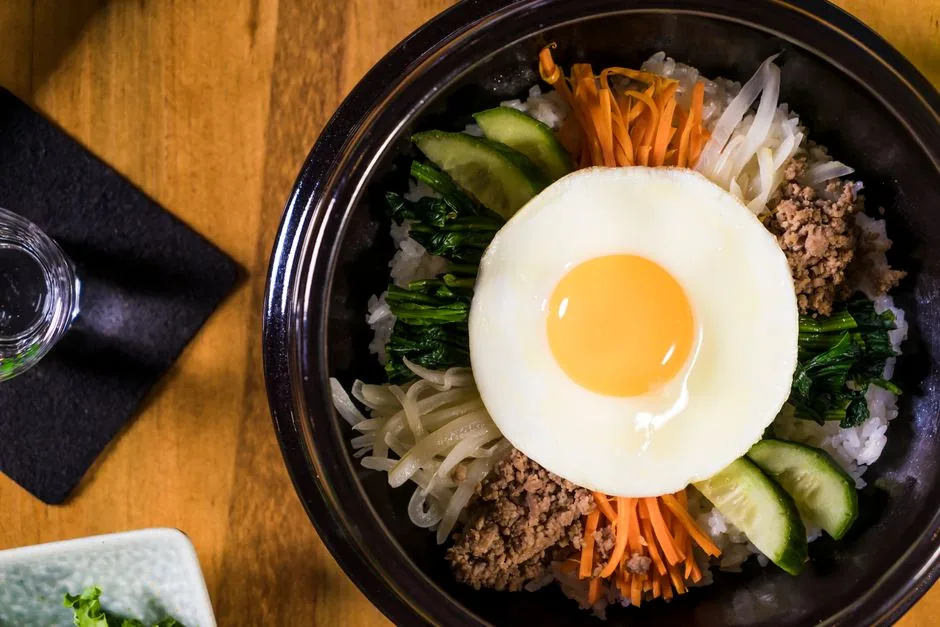
What’s in the bowl
A classic bibimbap starts with warm white rice, then a colorful ring of toppings laid on top:
- Namul — assorted seasoned vegetables, the heart of the dish: spinach, bean sprouts, carrots, mushrooms, zucchini, fernbrake (gosari), and more, each lightly seasoned on its own.
- Protein — commonly sautéed or raw beef, though it’s easy to skip.
- An egg — fried sunny-side-up or, in some versions, raw yolk.
- Gochujang — sweet-spicy chili paste, plus a drizzle of sesame oil for aroma.
That tidy arrangement you see in photos is just the starting position. As Wikipedia notes, bibimbap is meant to be stirred together thoroughly before eating, so every spoonful carries rice, vegetables, sauce, and egg at once.
The cardinal rule: mix it
Here’s the part that trips up first-timers — don’t eat it neatly, section by section. Stir the whole bowl with your spoon until the rice, gochujang, sesame oil, and toppings are evenly combined and the color turns uniform. Add the gochujang gradually so you control the heat; you can always add more. Once it’s mixed, eat with the spoon. Mixing isn’t bad manners — it’s the entire design of the dish.
Two versions you’ll see on menus
- Dolsot bibimbap — served in a sizzling hot stone bowl. The rice against the hot stone forms a crispy, golden crust called nurungji at the bottom, which is a genuine highlight. The bowl stays hot, and the egg often cooks in it.
- Regular (bowl) bibimbap — served in a normal bowl at room-friendly temperature; lighter and quicker.
Regional star: Jeonju bibimbap, from the city of Jeonju, is the most celebrated style, known for its abundance of toppings and refined balance. There’s also yukhoe bibimbap, topped with seasoned raw beef for the more adventurous.
Why it’s a great first Korean dish
Bibimbap is, frankly, one of the safest bets on any Korean menu for someone new:
- Customizable heat — the chili is added by you, on the side, so you set the spice level.
- Vegetable-forward and balanced — it feels light and wholesome.
- Easily vegetarian — order it without meat and egg, and confirm the gochujang/seasonings don’t contain anchovy or other animal products, and you’ve got a satisfying plant-based meal.
- No tricky technique — no grilling, wrapping, or shared-pot etiquette to learn.
If you’re building a list of dishes to try, bibimbap belongs near the top — see the rest in must-try Korean dishes, and if you’re brand new, start with Korean food for beginners.
Ordering tips
- Want the crispy rice? Ask for dolsot (stone bowl) bibimbap.
- Don’t eat beef or egg? Say so when ordering, and double-check the seasonings.
- It usually comes with banchan (side dishes) and often a small soup — all part of the meal, no extra charge.
- Mix thoroughly, then enjoy. There’s no wrong ratio once it’s combined.
A dish with deep roots
Part of bibimbap’s charm is how naturally it fits Korean food philosophy. It’s built on balance — a spread of vegetables, a bit of protein, fermented chili, and rice, each prepared with care and then brought together. There are a few origin theories: one ties it to using up assorted leftover namul in a single bowl; another connects it to ancestral-rite foods shared after ceremonies; another to farmers eating a quick, complete meal in the fields. Whatever the true root, the result is the same — a dish that’s colorful, nutritionally rounded, and endlessly adaptable, which is exactly why it travels so well to first-timers and why you’ll find a version in nearly every Korean restaurant abroad.
🙋 Speaking from experience
The one thing I always end up telling friends: actually mix it. I watched a visiting friend carefully eat bibimbap in neat little sections — a bite of rice, a bite of spinach, a bite of egg — trying to be tidy and respectful. I had to laugh and stop him: the whole point is to wreck it. You take your spoon, add gochujang to taste, and stir the entire bowl into a glorious mess until every grain of rice is coated. It looks less pretty and tastes a hundred times better. Start with a small spoon of chili paste, mix, taste, and add more — that’s the move that turns a nice-looking bowl into the dish Koreans actually love.
FAQ
Are you supposed to mix bibimbap? Yes. The dish is designed to be stirred together completely before eating — rice, vegetables, sauce, sesame oil, and egg all combined. Eating it unmixed misses the point and the balanced flavor.
Is bibimbap spicy? Only as spicy as you make it. The gochujang chili paste is added separately, so you control the heat by how much you stir in. You can keep it very mild or skip it.
Is bibimbap vegetarian or vegan? It can be. Order it without meat and egg, and confirm the gochujang and vegetable seasonings don’t include anchovy or other animal ingredients. Many vegetables (namul) versions are naturally plant-based.
What is dolsot bibimbap? Bibimbap served in a hot stone bowl. The rice crisps against the heated stone into a tasty golden crust (nurungji), and the bowl keeps everything sizzling.
More to explore: Korean stews and how to order at a Korean restaurant. More in the K-Food section.
About the author — Jae is a Seoul-based writer at K-Culture Log, helping newcomers get into Korean culture without the overwhelm.