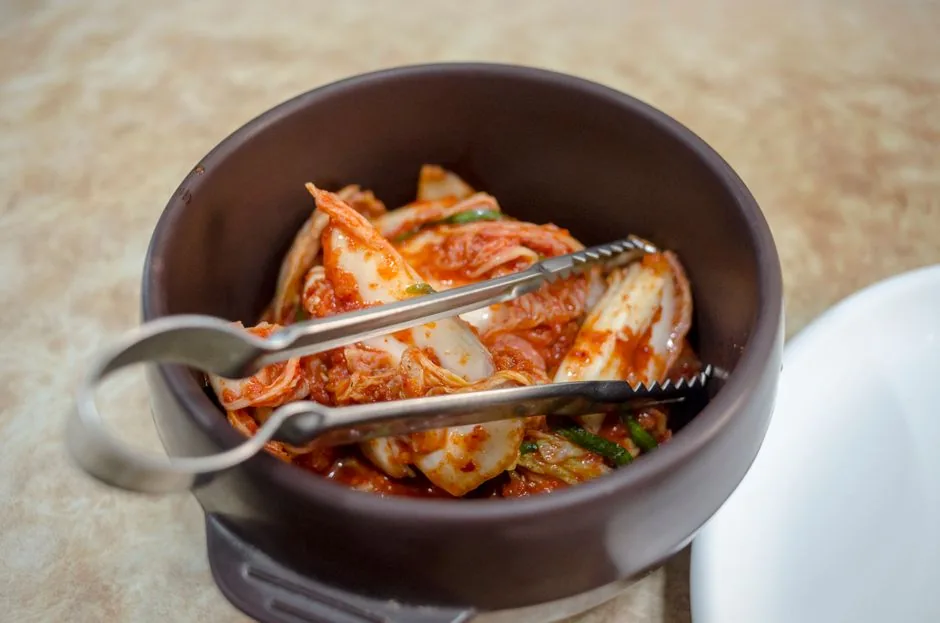
Kimchi is fermented vegetables — most often napa cabbage — seasoned with chili, garlic, ginger, and salted seafood, then left to ripen into something tangy, spicy, and deeply savory. It shows up at almost every Korean meal as a side dish, and it’s as central to Korean food as rice. If you’ve wondered what that red, pungent dish on every table actually is, here’s the plain answer plus the variety you might not know about.
What kimchi actually is
At its core, kimchi is a method as much as a dish: salt vegetables, season them, and let lactic-acid fermentation do the rest. The most common version is baechu (napa cabbage) kimchi, made by salting cabbage, then coating it in a paste of gochugaru (chili flakes), garlic, ginger, scallions, and usually jeotgal (salted, fermented seafood) or fish sauce for depth. Left to ferment, it develops that signature sour-spicy tang. According to Wikipedia, there are hundreds of documented varieties.
The flavor changes as it ages: fresh kimchi is crunchy and bright, while older, more fermented kimchi turns sourer and works beautifully cooked into stews and fried rice.
Not just one thing — the main types
“Kimchi” is a whole family, not a single recipe:
- Baechu kimchi — the classic napa cabbage version most people picture.
- Kkakdugi — cubed radish kimchi, crunchy and a little sweet.
- Oi sobagi — stuffed cucumber kimchi, refreshing in summer.
- Baek-kimchi — “white” kimchi made without chili, mild and slightly sweet — great if you don’t do spice.
- Dongchimi — a watery radish kimchi in a cold brine.
So if you think you don’t like kimchi because of heat, baek-kimchi or dongchimi are gentle entry points.
Kimjang: making kimchi together
There’s a cultural layer worth knowing. Kimjang is the tradition of making large batches of kimchi in late autumn to last the winter, often with family and neighbors pitching in. It’s such a meaningful communal practice that UNESCO recognized it as Intangible Cultural Heritage. That community spirit — everyone’s hands in the same big bowls — is a big part of why kimchi means more to Koreans than “a side dish.” My first kimjang, at a friend’s family home with a literal mountain of cabbage and my hands stained red for a day, taught me that faster than any recipe could: it’s a day you spend together, not a jar you buy.
Why Koreans eat it with everything
Kimchi is the default banchan (side dish): it cuts through rich, grilled, or oily food, adds acidity and crunch, and brings probiotics from fermentation. You’ll find it next to Korean BBQ, folded into stews like kimchi-jjigae, and fried into kimchi-bokkeumbap (kimchi fried rice). It’s rarely the star — it’s the supporting actor that makes everything else taste more complete.
How it’s served and stored
Kimchi is served cold in a small dish and refreshed throughout a meal rather than eaten all at once. At home it lives in the fridge — many Korean households even keep a dedicated kimchi refrigerator that holds a steady low temperature so it ferments slowly and evenly. Because it keeps changing as it ages, people often keep both fresh kimchi for eating raw and older, sourer kimchi for cooking. A jar lasts weeks to months refrigerated, and if it gets too sour for your taste, that’s not spoilage — it’s prime cooking kimchi for jjigae or fried rice.
Is kimchi healthy? Is it vegan?
Kimchi is often praised as a fermented, probiotic-rich food, and it’s largely vegetables — but it can be high in sodium, so “healthy” depends on how much you eat. On the vegan question: traditional kimchi usually contains fish sauce or salted seafood, so it isn’t automatically plant-based. Vegan kimchi exists (using ingredients like kelp or soy in place of seafood), but check the label or ask if you avoid animal products.
If you’re just getting into Korean food, kimchi is unavoidable in the best way — once you get used to it, meals feel incomplete without it. Add it to your list of must-try Korean dishes and work up from the milder types.
FAQ
What does kimchi taste like? Tangy, spicy, garlicky, and savory, with a fermented sourness that deepens as it ages. Fresh kimchi is crunchier and brighter; older kimchi is sourer and great for cooking.
Is all kimchi spicy? No. The common napa-cabbage version is spicy, but baek-kimchi (white kimchi) and dongchimi are made without chili and are mild — good starting points.
Is kimchi vegan or vegetarian? Not usually — traditional recipes include fish sauce or salted seafood. Vegan versions exist, so check the ingredients if you avoid animal products.
Is kimchi good for you? It’s a fermented, vegetable-based food often linked to gut health, but it can be high in salt. Enjoyed in normal side-dish portions, it’s a flavorful part of a balanced meal.
Keep exploring: Korean stews, must-try Korean dishes, and Korean food for beginners. More in the K-Food section.
About the author — Jae is a Seoul-based writer at K-Culture Log, helping newcomers get into Korean culture without the overwhelm.