If you’ve got about five days in Korea and don’t want to over-plan, this is a realistic Seoul-based itinerary with one day trip — enough to see the big sights, eat well, and still have room to wander. I’ve walked friends through some version of this more times than I can count, and the thing that always lands isn’t the packed schedule; it’s leaving space to get pleasantly lost. Here’s the plan, plus how to adapt it.
Before you read: the setup
This assumes you’ve handled the basics — entry, a transit card, and map apps — which I cover in the first-time Korea guide and getting around Korea. With a T-money card and Naver/KakaoMap, everything below is easy to reach by subway.
Day 1 — Old Seoul: palaces and hanok
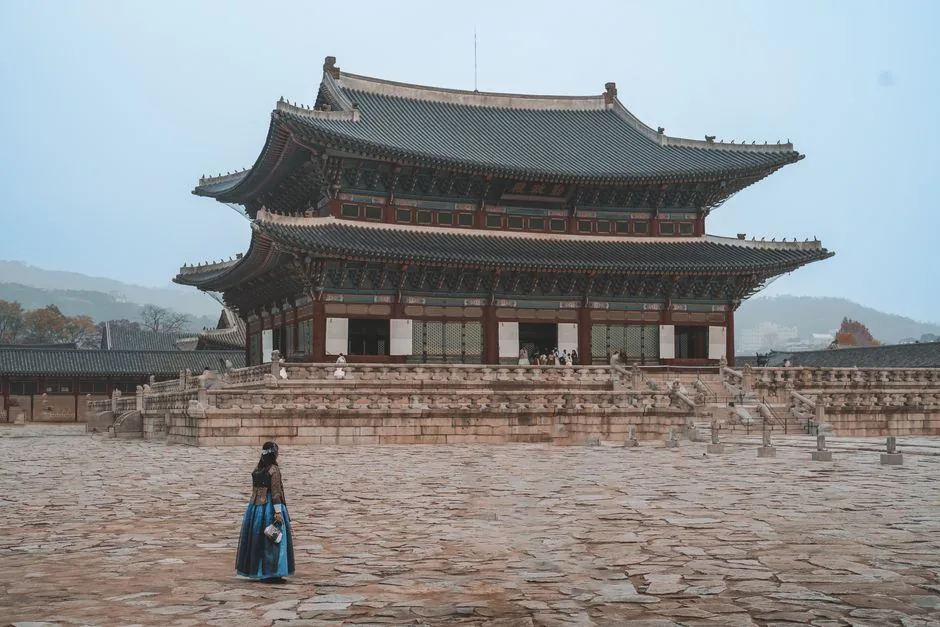
Ease in with the historic core: Gyeongbokgung Palace (try the changing-of-the-guard), then wander Bukchon Hanok Village and Insadong for tea and crafts. Eat a relaxed first Korean meal nearby — if you’re nervous about ordering, the how to order at a Korean restaurant guide helps. Keep day one light; jet lag is real.
Day 2 — Modern Seoul: Hongdae & Myeongdong
Swing between youth-culture Hongdae (street performances, cafes, indie shops) and Myeongdong for shopping and a street-food crawl — a perfect time to try tteokbokki and a Korean corn dog. If you’re into K-beauty, Myeongdong is wall-to-wall stores.
Day 3 — Views & night markets
Daytime: Namsan / N Seoul Tower for the city view (or a palace you missed). Evening: a traditional market like Gwangjang for street food, or Korean BBQ — see how to eat Korean BBQ so you’re not unsure at the grill.
Day 4 — Day trip
Pick one: a DMZ tour (book ahead), the historic city of Suwon (Hwaseong Fortress, easy by subway/train), or the Nami Island + Gangchon nature combo. Day trips are where Korea’s efficient trains shine.
Day 5 — Your Seoul, unscripted
Leave the last day loose: revisit a neighborhood you loved, hit a cafe street (Seongsu or Ikseon-dong), pick up last gifts, and slow down. This is the day my friends always say they enjoyed most — proof that the gaps matter as much as the plans.
How to adapt it
- 3 days? Do Days 1–3, skip the day trip.
- 7+ days? Add Busan (KTX ~2.5 hrs) for beaches and seafood.
- Foodie focus? Anchor each day around a dish from must-try Korean dishes.
- Slow traveler? Cut one sight per day. Korea rewards lingering.
- Rainy day? Swap an outdoor stop for a museum, a covered market, a café street, or a department-store food hall — Seoul is remarkably indoor-friendly, and a wet afternoon is a great excuse to slow down and eat your way through one building.
Whatever you do, build in a few Korean phrases and the small etiquette habits — they make every stop smoother. Then stop planning and go enjoy it.
Practical tips that make it smoother
A few things I always tell friends before they go:
- Cluster by neighborhood, not by checklist. Group sights that are close together each day so you’re not crisscrossing the city. The map apps make this easy once you trust them.
- Carry a little cash, tap for everything else. Most places take cards, but markets and small stalls love cash. Your T-money card covers transit and convenience stores.
- Eat where it’s busy. A crowded stall or restaurant is a reliable signal — high turnover means fresh food and locals’ approval.
- Build in rest. Korea tempts you to go dawn-to-midnight; one slow afternoon keeps the trip enjoyable instead of exhausting.
- Mornings for popular sights. Palaces and viewpoints are calmer and more photogenic early, before tour groups arrive.
None of this needs rigid planning — it’s just the rhythm that keeps a first trip feeling fun rather than frantic.
🙋 Speaking from experience
The itinerary mistake I see most (and made myself when planning trips) is cramming. My first attempt at mapping out a friend’s visit had five “must-see” spots a day, color-coded and back-to-back — and by day two everyone was exhausted, cranky, and skipping things anyway. The trips people actually remember fondly are the ones with breathing room: two or three anchors a day and permission to wander into whatever looks interesting between them. Some of my favorite Korea memories happened in the unplanned gaps — a random alley, a café we stumbled on, a market we weren’t “scheduled” for. Plan the anchors, leave the gaps. A trip is not a to-do list.
FAQ
Is 5 days enough for Korea? Plenty for a great first trip focused on Seoul plus one day trip. With 7+ days you can comfortably add Busan or more nature.
Do I need to book day trips in advance? Some do — DMZ tours in particular sell out and require advance booking with ID. City trips like Suwon can be done independently by subway/train.
Is Seoul easy to get around for tourists? Yes. With a T-money card and Naver Map or KakaoMap, the subway makes nearly everything in this itinerary simple to reach.
When’s the best time to visit? Spring (April–May) and autumn (September–November) have the most comfortable weather, as noted in the first-timer’s guide.
Start with the first-time Korea guide and getting around Korea. More in the Travel section.
About the author — Jae is a Seoul-based writer at K-Culture Log, helping newcomers get into Korean culture without the overwhelm.