Korean drinking has its own set of small rituals — pour with two hands, never fill your own glass, and turn your head away when you drink in front of someone older. None of it is hard, and locals don’t expect a visitor to nail every rule, but knowing a handful makes you instantly easier to drink with and far less likely to accidentally seem rude. Here’s the practical etiquette, plus what soju actually is.
First, what’s in the glass
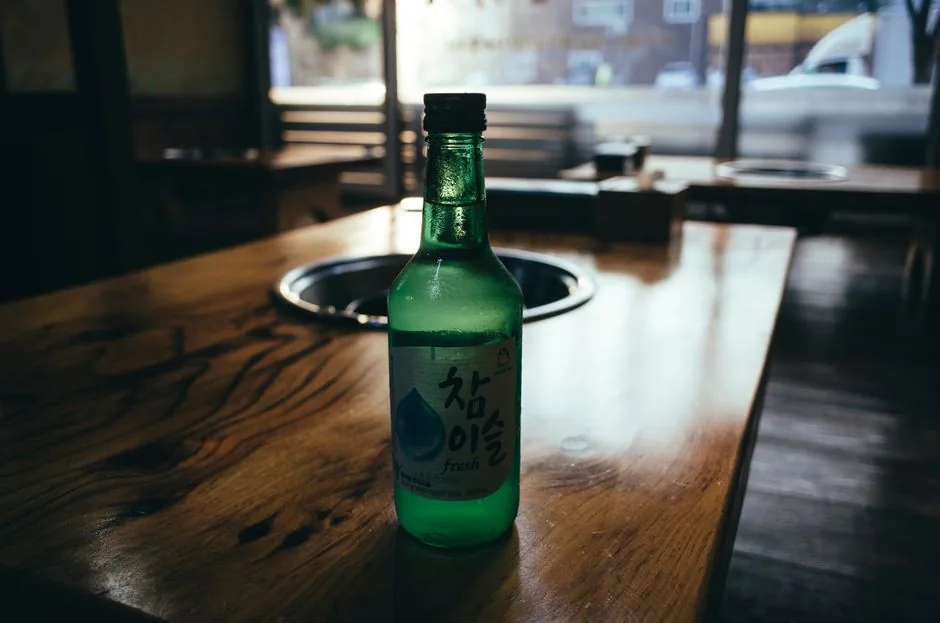
The default drink is soju — a clear, lightly sweet spirit, usually sold in a green bottle, typically around 16–20% alcohol. It’s cheap, ubiquitous, and meant to be shared over food. You’ll also see beer (often mixed with soju into somaek), makgeolli (a milky rice wine, great with savory pancakes), and increasingly fruit-flavored sojus. Drinks almost always come with anju — food ordered specifically to eat while drinking, because drinking on an empty stomach is frowned upon.
The core pouring rules
This is where the etiquette lives, and it’s mostly about respect through small gestures — the same two-handed habit that shows up across everyday Korean etiquette.
- Never pour your own drink. You pour for others; someone pours for you. Keep an eye on your companions’ glasses and refill them when low.
- Pour and receive with two hands when an elder or someone senior is involved — one hand on the bottle, the other lightly supporting your forearm or wrist. Same when receiving: hold your glass with both hands.
- The eldest is served first, and often pours the first round to start things off.
- Don’t top off a glass that isn’t empty in formal settings — wait until it’s drained before refilling.
Drinking in front of elders
One move surprises every first-timer: when you take a sip in front of someone notably older or senior, turn your head slightly away from them (and to the side), often shielding the glass a little with your hand. It’s a gesture of modesty and respect. When you clink glasses, hold yours a touch lower than the senior person’s rim. Tiny things — but Koreans notice and appreciate them.
How a drinking night flows
Korean drinking is social and structured. A typical outing moves in rounds — 1-cha (first place, usually dinner with drinks), then 2-cha (a second spot), sometimes 3-cha. Work dinners (hoesik) follow the same rhythm. The energy is collective: toasts (geonbae! = cheers), shared plates, and topping up each other’s glasses.
The first drink poured to you is usually accepted as a sign of joining in — but accepting isn’t the same as emptying it. You can take the glass, have a sip, and pace yourself.
Korean drinking games you’ll probably run into
Part of Korean drinking culture is the games — silly, fast, and a great equalizer that pulls a quiet table together. You don’t need to master them; just knowing the common ones means you won’t be lost when someone suddenly starts a round. The classics:
- 369 (sam-yuk-gu): count upward around the table, but clap instead of saying any number containing 3, 6, or 9 (so 3, 6, 9, 13, 16… are claps). Slip up and you drink.
- Baskin Robbins 31: take turns saying one to three numbers in sequence; whoever is forced to say 31 loses and drinks.
- Noonchi game (sense game): players randomly stand one at a time calling out “1, 2, 3…” in order — but if two people stand and say the same number at once, they both drink. It’s pure timing and reading the room.
- Bottle-cap flick: twist the little tab on a soju cap, then take turns flicking it; whoever knocks it off gets to assign a drink.
- Titanic: float an empty shot glass in a beer glass and take turns pouring soju into it — whoever makes it finally sink drinks the whole thing.
None of it is high-stakes, and you can always play with a soft drink. The point is the laughing, not the alcohol.
You can absolutely pace yourself
Here’s the part worth saying clearly: you don’t have to keep up, and you don’t have to get drunk. Korean drinking culture has a strong social pull, but it’s completely fine to drink slowly, switch to a soft drink, or stop. Polite ways to ease off: keep your glass partly full (an empty glass invites a refill), nurse your drink, or simply say you’re driving or not feeling well. A good host won’t push, and “I’m pacing myself” is always a fine answer. Drink water between rounds and eat the anju — that’s what it’s there for.
If you don’t drink at all, that’s respected too; just say so warmly and join the meal and the toasts with a soft drink. The social part — sharing food, looking out for each other’s glasses, geonbae — matters far more than the alcohol.
The five rules to remember
Pour for others (two hands for elders), never fill your own, let the eldest go first, turn away when you sip in front of seniors, and pace yourself without guilt. Master those five and you’ll fit right in at any Korean table. It pairs naturally with Korean dining etiquette — same spirit of attentiveness, just with a glass in hand. Planning a trip? It all fits into the first-time Korea guide.
🙋 Speaking from experience
I learned most of this the way everyone does here: at my first proper company dinner, by watching and copying a half-second behind everyone else. I still remember the small panic of not knowing whether to pour for the person next to me first (you do), and instinctively turning my head to the side on the first sip because the person across from me was older. Nobody teaches it in a lecture — you absorb it in real time. So if you’re a visitor, don’t worry about executing it flawlessly; watch the table, keep an eye on the eldest person’s glass, and use two hands when in doubt. That attentiveness is the etiquette. The rest is just details.
FAQ
What is soju? Soju is a clear Korean spirit, lightly sweet, usually around 16–20% alcohol and sold in a green bottle. It’s inexpensive, extremely common, and meant to be shared with food (anju).
Why do Koreans turn away when drinking? Turning your head slightly away when sipping in front of someone older or senior is a gesture of respect and modesty. Clinking your glass slightly lower than theirs sends the same signal.
Can I pour my own drink in Korea? Customarily no — you pour for others and let others pour for you, watching for empty glasses to refill. Pouring your own is considered a bit off, especially in a group with elders.
Do I have to drink a lot to be polite? No. Accepting the first drink and joining the toast matters, but you can sip and pace yourself. Keeping your glass partly full, switching to a soft drink, or saying you’re driving are all perfectly acceptable.
Is it rude to refuse a drink in Korea? Not if you do it warmly. Turning down alcohol entirely is respected — just say you don’t drink (or you’re driving), and join the toast and the meal with a soft drink. What matters socially is being present, not being drunk.
What are common Korean drinking games? The most common are 369 (clap on any number with 3, 6, or 9), Baskin Robbins 31 (avoid saying “31”), the noonchi/sense game (timing-based counting), bottle-cap flick, and Titanic (floating a shot glass in beer). They’re light and you can play with a soft drink.
What is somaek? Somaek is soju mixed with beer (so from soju, maek from maekju, beer). It’s a hugely popular combo at Korean tables, mixed to taste and shared over food.
More for your trip: Korean dining etiquette and everyday etiquette in Korea. More in the Travel section.
About the author — Jae is a Seoul-based writer at K-Culture Log, helping newcomers get into Korean culture without the overwhelm.