Somewhere in the last year or so, a video of Kylie Jenner holding a small, pen-shaped Korean skincare gadget started circulating online. The device was the Medicube AGE-R Booster Pro. Within days the brand’s site had lines of people waiting. Thousands of comments asked the same thing: “What even is that thing, and do I need one?”
That moment was not a one-off. It was a very visible snapshot of something that had already been building quietly for a while — Korean at-home beauty devices going properly mainstream.
I want to be honest with you upfront: I am not here to tell you which device to buy, or to promise you anything. What I want to do is explain what these gadgets actually are, why they got so popular, what different categories claim to do, and what you should know before spending money on any of them. Because the hype is real, but it deserves some unpacking — and you deserve a straight answer more than you deserve another unboxing video.
How This Even Became a Thing
For a long time, clinic-grade skin treatments — RF lifting, LED phototherapy, electroporation — were things you went to a dermatology clinic in Gangnam to get done. They were professional procedures, administered by trained aestheticians, usually costing a significant amount per session.
Korean brands started miniaturizing those technologies. The goal was not to replicate a clinical result (that would be a medical claim, and a fraught one) but to bring a version of the experience into everyday home routines. Given that Korean skincare culture already treats daily routines as a kind of ritual — layering essences, using sheet masks, treating skin as something you actively tend to rather than just wash — adding a device to that ritual made intuitive sense.
By 2025 and into 2026, the market expanded fast. South Korea is now exporting over $1.6 billion USD worth of cosmetic devices annually, according to industry tracking. That is not a niche. That is a category.
And unlike some beauty trends that stay within K-beauty circles, devices crossed over. When Medicube’s device maker reported over six million units sold globally at the start of 2026, it was clear this was not just a Korean thing anymore. Brit+Co, BeautyMatter, and Marie Claire all had 2026 coverage on Korean home devices. The category got real editorial attention, not just influencer posts.
The Main Device Categories, Explained Simply
If you read about these gadgets and get lost in the acronyms, here is a plain-English breakdown of what the main technology types claim to do. Note the word “claim” — I’ll come back to that.
LED Masks and LED Tools
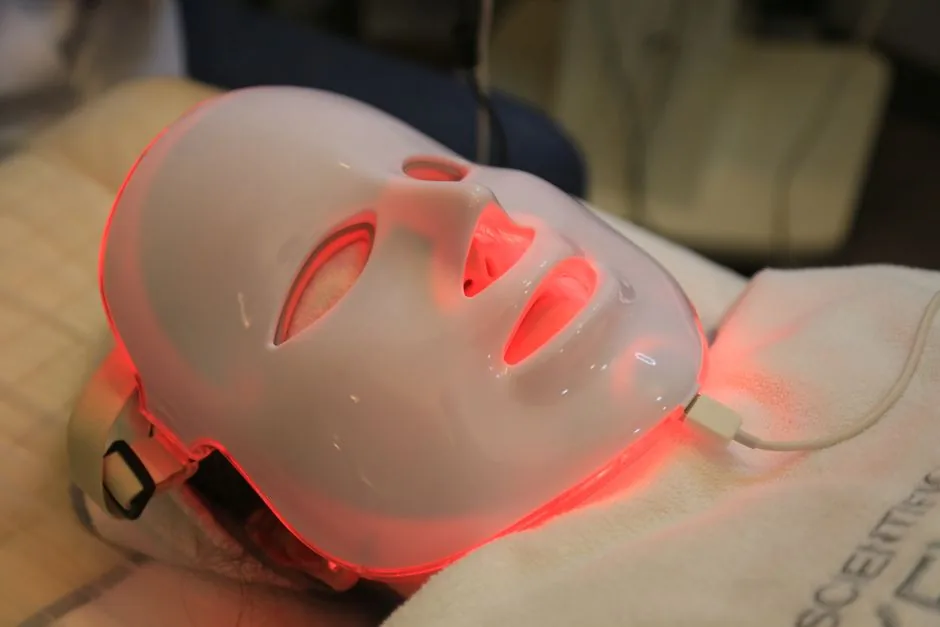
LED light therapy devices emit specific wavelengths of light at your skin. Different colors target different concerns, according to how they’re marketed: red light is the most common, associated with anti-aging and collagen-related claims; blue light is used for acne-prone skin; near-infrared (NIR) is said to penetrate deeper layers. LED masks from brands like LG Pra.L and Cellreturn have become category leaders in Korea, with premium masks now featuring over 1,000 LED chips.
What you should know: LED therapy has the most research backing of any home device category, though “research backing” and “guaranteed results” are not the same thing. Sessions are typically 10–20 minutes. You sit there, essentially, while the light does its thing. There is no sensation. It is one of the lower-risk categories if you follow the manufacturer’s instructions and avoid looking directly at the lights.
Microcurrent Devices
Microcurrent devices deliver very low-level electrical currents to the skin’s surface and underlying muscles. The claim is that these currents stimulate facial muscles, which over time may improve contour, firmness, and overall tone. The sensation is usually mild — a slight tingle or buzz on the skin.
This category has been around for decades in professional settings. The home-use versions are significantly lower intensity than clinical machines. Brand examples in the Korean market include the Foreo Bear and various multi-function devices that include microcurrent as one of their modes.
Booster / Conduction Devices (Electroporation)
This is the category the Medicube AGE-R line sits squarely in, and it’s the one that got the most viral attention. The core technology is electroporation — creating brief, temporary openings in the skin’s outer layer to allow skincare actives to penetrate more deeply than they would with hand application alone.
The idea is that your serums and essences work harder when delivered this way. It is not about the device treating your skin directly; it is about making your existing products more effective. That framing resonates with Korean skincare culture, which has always been about layering actives strategically. The AGE-R line also combines multiple modes in one wand — microcurrent, LED, sonic vibration, and an “Air Shot” mode — which is why they are sometimes called 6-in-1 or 8-in-1 devices.
RF (Radiofrequency) Devices
RF devices use electromagnetic energy to heat the deeper layers of skin. In professional settings, this is used for skin tightening. Home-use RF devices operate at much lower energy levels. They tend to cost more than other device categories, and the at-home versions require consistent, long-term use to see any gradual changes. This is a category that probably deserves the most skepticism in terms of “dramatic results at home” — though brands like Dualsonic and NEWA have Korean and international followings.
Why Koreans Actually Use These
Here is the part I think gets missed in a lot of English-language coverage: in Korea, devices are not usually framed as a replacement for skincare products. They’re an addition to a routine that already exists. The logic is additive, not substitutional.
If you are already using a good essence and serum, the thought is: why not get more out of them by using a conduction device? If you are already spending time on a sheet mask in the evening, why not swap a few sessions a week for an LED mask?
This is consistent with the Korean skincare philosophy in 2026 — layering and enhancing, not shortcuts. And it connects to the bigger 2026 K-beauty ingredient trends you might already be reading about, where people are looking for smarter delivery of actives, not necessarily more actives.
Devices became popular partly because they satisfy that instinct. They are tactile, ritualistic, and feel like you are actively doing something. Whether that “doing something” produces measurable results varies by category, individual, and consistency of use.
What Realistic Expectations Actually Look Like
This is where I have to be direct, because the marketing around these devices is aggressive.
No home device will replicate a clinical procedure. The energy levels are different. The precision is different. The operator skill is different. Anyone telling you an at-home RF wand does the same thing as an in-clinic RF treatment is either misinformed or selling something.
That said, “not the same as a clinic” is not the same as “useless.” Some people report genuine, gradual improvements with consistent device use — particularly with LED masks (which have the most peer-reviewed literature behind them) and booster-type devices used alongside high-quality actives. The keyword is consistent. These are not one-session-and-done tools. Most manufacturers recommend several sessions per week over months.
Evenskyn’s 2026 comparison of home anti-aging devices noted that clinical research on at-home devices generally shows modest, gradual improvement rather than dramatic transformation — and results fade without continued use. That is probably the most honest one-sentence summary I have seen.
For a broader view of what ingredients and formulations are actually doing the heavy lifting in 2026 Korean skincare, the barrier and microbiome care space is where a lot of the evidence-backed innovation is happening — and it requires no device at all.
Safety Notes — Actually Read These
This matters, so I am putting it here, not in a footnote.
- Follow the device instructions exactly. Do not use higher settings than recommended to try to speed up results. More intensity is not always more effective, and with microcurrent and RF especially, overuse can irritate.
- Patch test first. Even if a device does not use a topical product, the current or heat can react differently on sensitive or compromised skin. Start low and slow.
- Some skin conditions are contraindicated. If you have active rosacea, broken skin, certain skin conditions, or are pregnant, many devices are not recommended. Check with a dermatologist before starting, not after.
- LED masks and eyes. Most come with protective goggles. Use them.
- This is not medical advice. Nothing in this post should substitute for a conversation with a qualified dermatologist if you have specific skin concerns or conditions.
If you have reactive, barrier-damaged skin, a device is probably not where to start. Get the basics right first.
The Bigger Picture
What Korean beauty devices represent, to me, is an extension of something K-beauty has always been good at: making skincare feel worth doing. That part — the ritual, the small daily act of paying attention to yourself — is genuinely not nothing. A nice-feeling tool, a ritual, a routine that you look forward to. That experiential quality has always been part of why Korean skincare products have global fans.
Whether the results match the price tags is genuinely case-by-case. The LED mask category has the most science. Booster devices have strong logic if you are already using good products. RF at home is the most “proceed with realistic expectations” category.
But if you are curious about what the gadgets in those viral videos actually do — now you know.
🙋 Speaking from experience
Let me save you some money with a confession: I’ve bought two of these devices, and one of them lives in a drawer collecting dust. The problem wasn’t that it didn’t work — it’s that a gadget only helps if you actually use it consistently, and “five minutes a night, forever” is a bigger ask than the unboxing video makes it look. The one I do still use earned its place because it fit a habit I already had. So before you buy, be honest about whether you’ll keep it up. A basic routine you do every day beats a fancy device you use twice and abandon — every single time.
FAQ
Do I need a Korean beauty device to get results from K-beauty skincare? No. The products — cleansers, essences, serums, moisturizers, SPF — do the work on their own. Devices are additions to a routine, not requirements. If you are just starting with Korean skincare, focus on building a consistent product routine first. A device is something to consider later, if at all.
What is the difference between microcurrent and EMS? Both use electrical stimulation, but they target different layers. Microcurrent is typically used at the skin’s surface to promote product absorption and surface-level tone. EMS (electrical muscle stimulation) targets deeper facial muscles, with claims around lifting and contour. Many modern Korean multi-function devices include both modes.
Is it safe to use these devices every day? Depends entirely on the device and the mode. LED therapy is generally designed for daily or near-daily use. Microcurrent and EMS devices often recommend alternate-day use to let muscles recover. RF is typically limited to once or twice a week. Always follow the specific schedule in your device’s manual — “more often” is not “better” with these tools.
Why are Korean brands specifically dominating this category? Korea has a strong infrastructure connecting dermatology clinics, cosmetic science research, and consumer skincare culture. Korean consumers are unusually detail-oriented about skincare routines and willing to invest in them — which creates a domestic market that rewards innovation. Brands iterate fast and price competitively for the international market. That combination has produced devices that hit a quality-to-price range that Western clinical-grade devices often do not.
Follow all device instructions carefully. Patch test before use. This post is general skincare information, not medical advice. If you have a skin condition or sensitivity, consult a dermatologist before adding any device to your routine.
About the author — Jae is a Seoul-based writer at K-Culture Log, helping newcomers get into Korean culture without the overwhelm.